

.png)
.png)
.png)

.png)



A clear breakdown of what Brainforge fixes, how fast, and what it actually delivers.
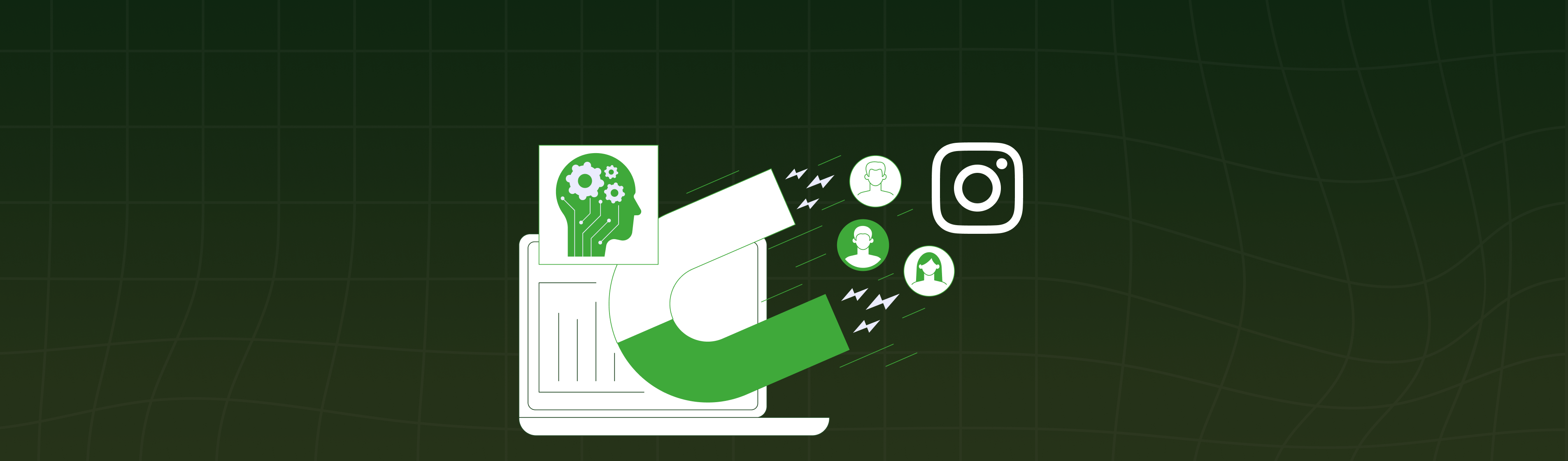
Instagram doesn't show posts in order anymore. Machine learning decides what you see first, last, and everything in between.
We recently analyzed Meta's transparency documents and system cards to understand how Instagram's AI systems work. This architecture mirrors what powers other major platforms, though Instagram's approach involves multiple specialized systems working together across different surfaces. Here's how Instagram uses AI to rank your feed and what that means for users and creators.
Key takeaways
- Instagram operates multiple AI systems, not one algorithm, with each surface like Feed, Stories, Reels, and Explore using its own ranking model
- The system predicts user actions through Machine Learning (ML), calculating the probability you'll like, save, share, or watch content to completion
- Feed ranking combines user history, creator signals, content analysis, and contextual factors to generate a personalized score for each post
- Saves and shares carry heavier weight than likes because they indicate deeper engagement and content value
- Community guidelines and recommendation guidelines create two distinct layers of content filtering that affect creator visibility
How the Instagram algorithm works in 2025
Before diving into specifics, we need to address a common misconception. There is no single Instagram algorithm. Meta operates separate AI systems for Feed, Stories, Reels, Explore, Search, and Notifications. Each system has its own ranking logic, though they share underlying infrastructure.
The prediction-based ranking model
Instagram's AI doesn't simply count likes. It predicts behavior. For every piece of content, the system calculates probabilities for specific actions. Will you watch this Reel for more than three seconds? Will you tap the creator's profile? Will you share this post via direct message?
These predictions come from neural networks trained on billions of interactions. The system learns patterns across millions of users to estimate how you'll respond to content you haven't seen yet.
The ranking pipeline
Each post moves through a multi-stage process. First, candidate generation pulls hundreds of potential posts from accounts you follow plus recommendations from accounts you don't. Second, feature extraction computes thousands of signals about you, the creator, and the content itself. Third, prediction models estimate action probabilities. Finally, a scoring function combines these predictions into a single rank, with penalties for policy violations or low quality.
This pipeline runs continuously, updating as you interact with content.
The four signal categories driving feed ranking
Meta's documentation reveals four major signal categories that determine what Instagram posts appear in your feed.
User activity signals
The system tracks everything. Posts you've liked, saved, shared, and commented on create a preference profile. Reels you watched to completion signal interest in that format or topic. Stories you tap through quickly suggest disinterest in certain accounts. Search queries, profile visits, and time-of-day usage patterns all contribute. Even how long you linger on a post before scrolling matters. These data pipelines process terabytes of behavioral information daily, as Meta's AI ranking documentation confirms.
Creator and account signals
Instagram also models creators. The system tracks follower counts, growth rates, typical content verticals, and aggregate engagement on recent posts. Accounts with high report rates or frequent guideline violations receive penalties that limit recommendation eligibility. When creators post content that gets hidden or marked "Not Interested" by many users, the system learns to demote their future posts.
Content analysis signals
Computer vision analyzes images and video. The system detects objects, faces, text overlays, and resolution quality. Audio analysis identifies music tracks, trending sounds, and speech content. Caption text, hashtags, alt text, and location tags provide semantic signals. Format matters too. Reels receive different treatment than static images. Watermarks from other platforms trigger quality demotions. Instagram's big data infrastructure processes these signals at massive scale.
Context and timing signals
Current device, connection quality, and session state influence ranking. The system considers what you've already seen in this session to avoid repetition. Time of day affects content mix. Recent sessions shape immediate predictions. If you've been watching Reels for fifteen minutes, the algorithm behaves differently than if you just opened the app.
How Instagram ranks different surfaces
Each Instagram surface uses different weights and prediction targets.
Feed ranking
Feed combines posts from accounts you follow with recommended content from accounts you don't. The system prioritizes predicted watch time, share likelihood, and save probability. Comments matter, but shares and saves carry more weight because they indicate content worth revisiting or spreading. Instagram avoids showing too many posts from the same account consecutively and limits recommendation density to prevent fatigue.
Stories ranking
Stories ranking emphasizes relationships over virality. The system weighs viewing history heavily. If you consistently watch a specific account's Stories, those appear near the front of your tray. Reply and reaction history strengthen the relationship signal. Accounts whose Stories you skip or exit quickly drift rightward over time. Direct message frequency also influences ranking.
Reels ranking
Reels operates as a discovery engine. Most Reels you see come from accounts you don't follow. The system optimizes for entertainment value and watch-through rates. Predicted reshare probability carries significant weight. If users consistently swipe away from a creator's Reels within three seconds, the algorithm learns to demote that content. Trending audio and original content receive boosts.
Explore page ranking
The Explore page surfaces content entirely from accounts you don't follow. Post popularity matters more here than in Feed. Speed of engagement, including rapid like and save accumulation, signals trending content worth surfacing. The system uses embeddings learned from interaction graphs to find content similar to what you've engaged with elsewhere.
The recommendation guidelines layer
Instagram operates two distinct content filtering systems. Community guidelines define what stays up or gets removed. Recommendation guidelines define what gets amplified.
Content can exist on Instagram without being recommended. Posts containing borderline violence, regulated products, or certain sensitive topics may remain visible to followers but never appear in Explore, Reels suggestions, or Feed recommendations. This creates what creators experience as reduced reach without formal removal.
Meta's Account Status feature now shows creators whether their content is recommendation-eligible and which posts triggered restrictions. This represents a transparency improvement, though the underlying model thresholds remain opaque.
Why saves and shares matter most
Multiple sources confirm that saves and shares function as super-signals in Instagram's ranking systems. A save indicates content worth revisiting. A share, especially via direct message, suggests content worth spreading to close connections.
Adam Mosseri has publicly stated that sends represent one of the top ranking signals. This makes sense from a machine learning perspective. Saves and shares require more intentional action than double-tapping to like. They correlate with content that provides lasting value rather than momentary entertainment.
For creators, this means optimizing for shareability and save-worthiness rather than pure like counts.
The feedback loop problem
Instagram's ranking creates a closed feedback loop. You show micro-preference for a theme by watching one Reel to completion. The system infers that theme is valuable and shows more of it. You see higher density of that theme, which shifts your perception of what's normal. Your subsequent behavior reinforces the model's belief.
This isn't malicious design. It's a structural byproduct of optimizing for engagement. The system doesn't distinguish between content that keeps you engaged because it's genuinely valuable versus content that exploits psychological vulnerabilities.
What this means for Instagram users
Understanding how the algorithm works enables more intentional use. Every interaction trains your personal ranking model. Lingering on content you don't actually want more of still sends positive signals. Using "Not Interested" and unfollowing accounts actively reshapes your feed. The Following feed option shows posts chronologically from followed accounts only.
The recommendation reset feature, when available, allows clearing learned preferences to start fresh.
What this means for creators and businesses
Creators live under algorithmic labor conditions. Small ranking weight changes can dramatically alter reach and income. The platform functions as a semi-opaque employer whose performance review happens through engagement metrics.
Practical implications include focusing on content that drives saves and DMs rather than passive likes. Watch time and completion rate dominate Reels performance. Caption keywords and alt text matter for both in-app search and Google indexing of public creator accounts. Consistency helps because regular posting maintains algorithmic favor.
The rise of AI-generated influencers introduces competition from synthetic personas that never make mistakes or age. Big data and AI enable platforms to optimize every element of user experience, including who creates content.
FAQ
Does Instagram shadowban accounts?
Instagram denies maintaining shadowban flags. However, the combination of recommendation guidelines and safety heuristics can create de-facto reduced visibility for certain topics and communities. The Account Status feature shows recommendation eligibility.
How does Instagram decide what content to recommend?
The system predicts which content you're most likely to engage with based on your history, the creator's track record, content features, and current context. Recommendations come from content similar to what you've engaged with before.
Can I control what the Instagram algorithm shows me?
Yes. Use "Not Interested" on posts you don't want more of. Mute or unfollow accounts. Use the Following feed for chronological posts. Adjust Sensitive Content Controls. Each action trains your personal model.
Why did my reach drop suddenly?
Sudden reach drops typically result from content triggering recommendation guidelines, changes in follower engagement patterns, or platform-wide algorithm updates. Account Status shows whether specific posts have restrictions.
How does Instagram rank posts from accounts I follow versus accounts I don't?
Posts from accounts you follow compete in Feed based on predicted engagement and relationship signals. Recommended posts from unfollowed accounts appear based on similarity to content you've engaged with. The two categories use different ranking weights.
Summary
Instagram's AI systems represent sophisticated machine learning infrastructure operating at massive scale. Multiple ranking models process thousands of signals to predict user behavior across Feed, Stories, Reels, and Explore. The objective function optimizes for engagement and retention, with policy constraints limiting certain content from recommendation.
For users, every interaction shapes future content. Understanding the feedback loop enables more intentional consumption. Controls exist but require active use.
For creators, saves and shares matter more than likes. Watch time drives Reels performance. SEO principles now apply to Instagram as public content becomes searchable. The platform's ranking models create precarious conditions where visibility depends on opaque algorithmic decisions.
The core insight is that Instagram's AI doesn't show you what you want. It shows you what it predicts will maximize your engagement. Those aren't always the same thing.